 Call 214-808-7664 to


Last updated November 10, 2026. We review this article every six months, so the next review is May 2027.
A point-of-purchase (POP) display is a printed or built unit that holds your product right where shoppers decide what to buy. In a state with a retail workforce as large as Texas has, with about 1.42 million people employed in retail as of December 2025, shelf space is crowded and a display is one of the few ways to stand out inside the store.
What a POP display is
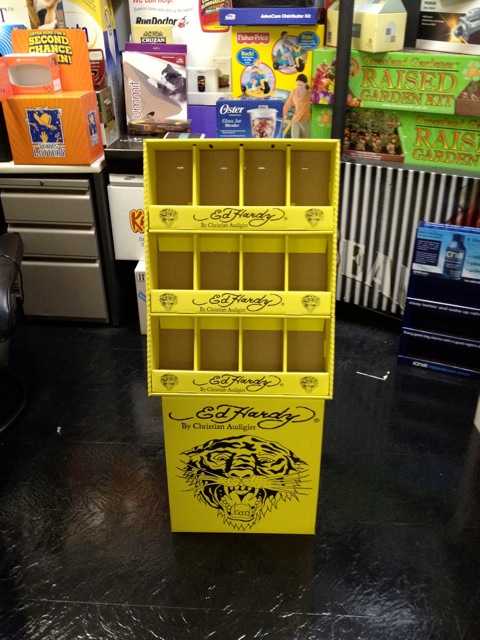
You’ll also hear it called a point-of-sale or retail display. It’s placed near related products or in a high-traffic spot such as the front of the store, the middle of an aisle or the checkout. Floor displays and pallet displays make a destination out of a product. Counter units catch impulse buys by the register. The goal is the same either way: give a product its own space and a reason for the shopper to stop.
What the research says
The most-cited numbers come from POPAI, the point-of-purchase industry association. Its 2014 mass-merchant study found that 82% of purchase decisions were made in the store and that 34% of shoppers made no list at all. Its earlier grocery study put the in-store figure at 76%. In the mass-merchant study, 16% of unplanned purchases were driven by a display the shopper saw in the store.
Main types of POP displays
| Type | Where it sits | Best for |
|---|---|---|
| Floor and pallet displays | Aisle ends, store entrances | Launches, seasonal and high-volume products |
| Counter-top displays | Checkout and service counters | Impulse items, small products |
| Dump bins | Aisles and promotional areas | Price-driven, loose or stacked product |
| Corrugated point-of-sale displays | Anywhere the retailer allows | Promotions that run weeks or months |
How to order in Dallas-Fort Worth
Tell us what you’re selling, where it will be displayed, how many units you need and when it has to be in stores. We’ll recommend a format, build a sample and manufacture the display in our Frisco facility. You can also visit the showroom at 2601 Network Boulevard, Suite 440, Frisco, TX 75034, or call 214-808-7664.
Questions we hear a lot
What does point of purchase mean?
It means marketing placed where customers make buying decisions in a physical store. A POP display is the most common form.
What does POS mean in marketing?
POS stands for point of sale, usually the checkout area. Every POS display is also a POP display, but a POP display can sit anywhere in the store.
Why are POP displays important?
Because most purchase decisions are made in the store, and a display gives your product a space that’s separate from the shelf crowd.
Should I order online or work with a local printer?
Either works. A local manufacturer is easier when you want samples in hand and quick revisions, and you can reach us by phone, email or in person.
More: POP displays · custom POP displays · designing displays that sell · locations we serve